Garden Snail Tote Bag
The Garden Snail (Helix hortensis), from George Shaw's The Naturalist's Miscellany, volume 1, plate 30 (May 1790). Hand-colored natural-history illustration by Frederick Polydore Nodder.
The garden snail, historically classified as Helix hortensis and now known as Cepaea hortensis, inhabits gardens, hedgerows, grasslands, and woodland edges throughout much of Europe. Its shell displays considerable variation, ranging from pale yellow to pink or brown, often decorated with dark spiral bands. These patterns are inherited, and individuals of the same species may have entirely different shell colors. The garden snail uses a muscular foot to glide across surfaces on a thin layer of mucus and possesses two pairs of retractable tentacles, with its eyes located at the tips of the longer upper pair. Primarily active in damp conditions, it feeds on leaves, algae, and decaying plant material.
During courtship, these hermaphroditic snails may pierce their partners with a sharp, calcium-carbonate structure called a love dart, which transfers mucus that influences reproduction. Both mating partners can subsequently lay eggs in the soil, often producing clutches of more than 100 eggs.
Product Details
· Size: 13″ × 13″
· Durable 100% spun polyester
· Medium-weight fabric (6.49 oz/yd²; 200 g/m²)
· Double-stitched seams
· Cotton webbing handles
· Nonwoven laminated interior lining
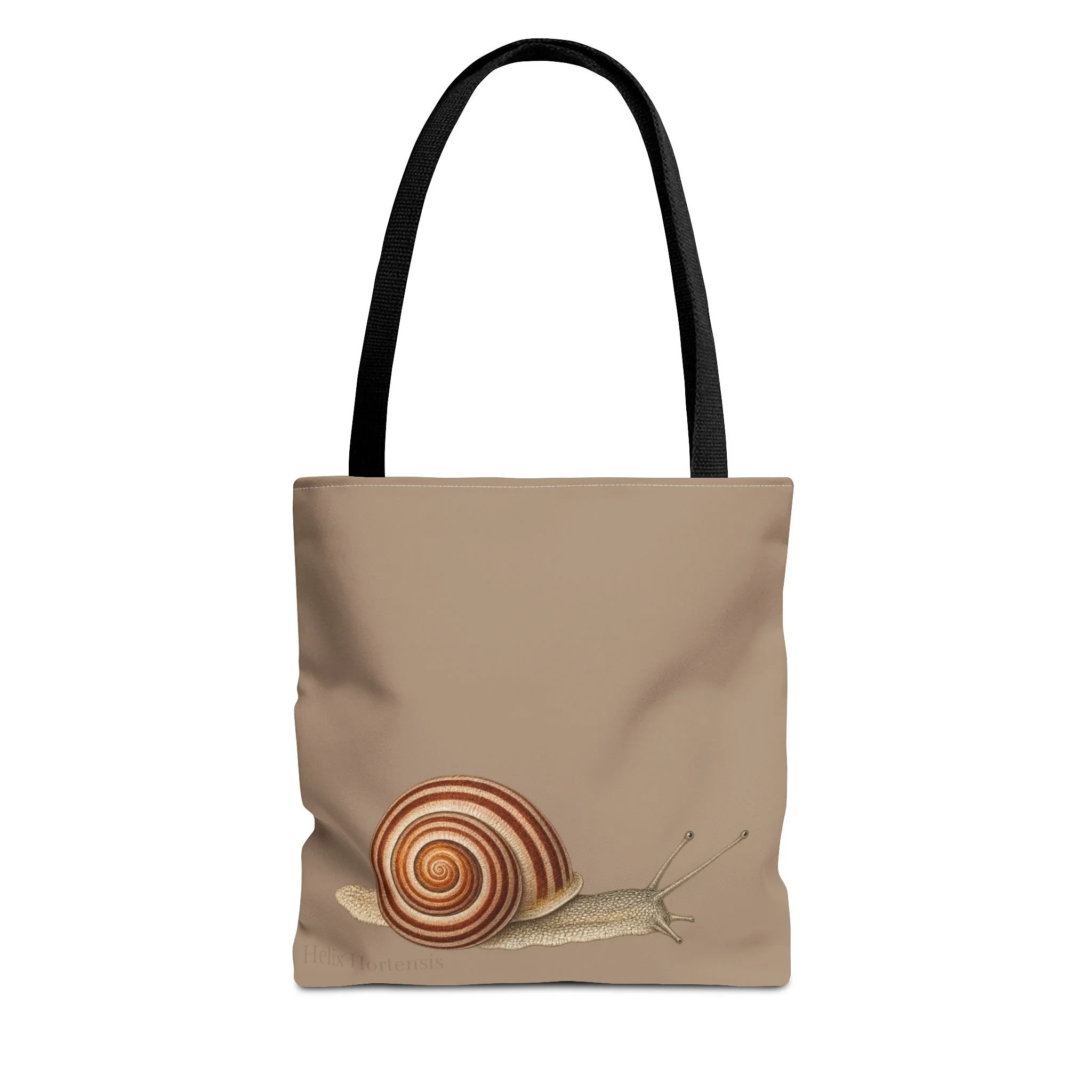 Image 1 of 12
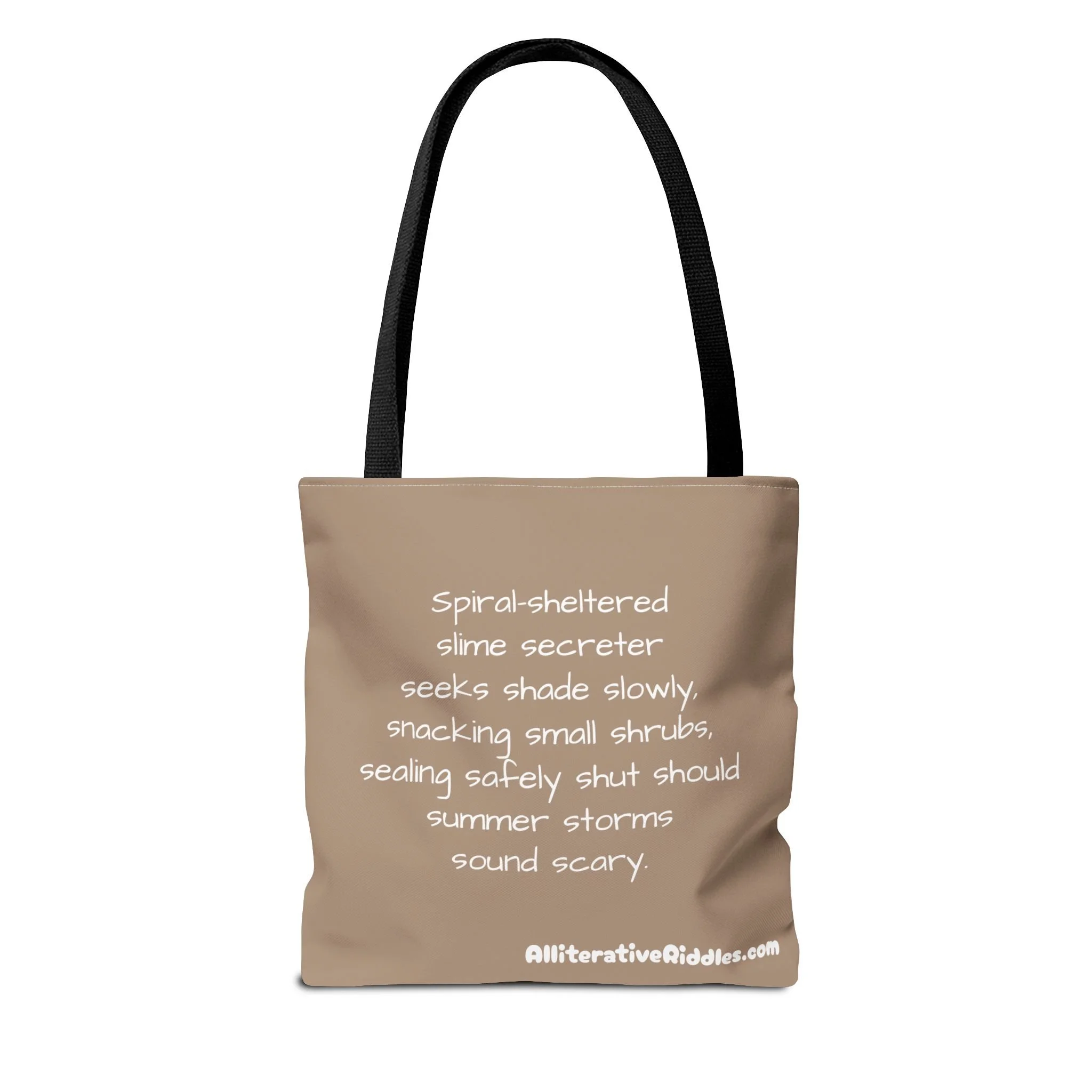 Image 2 of 12
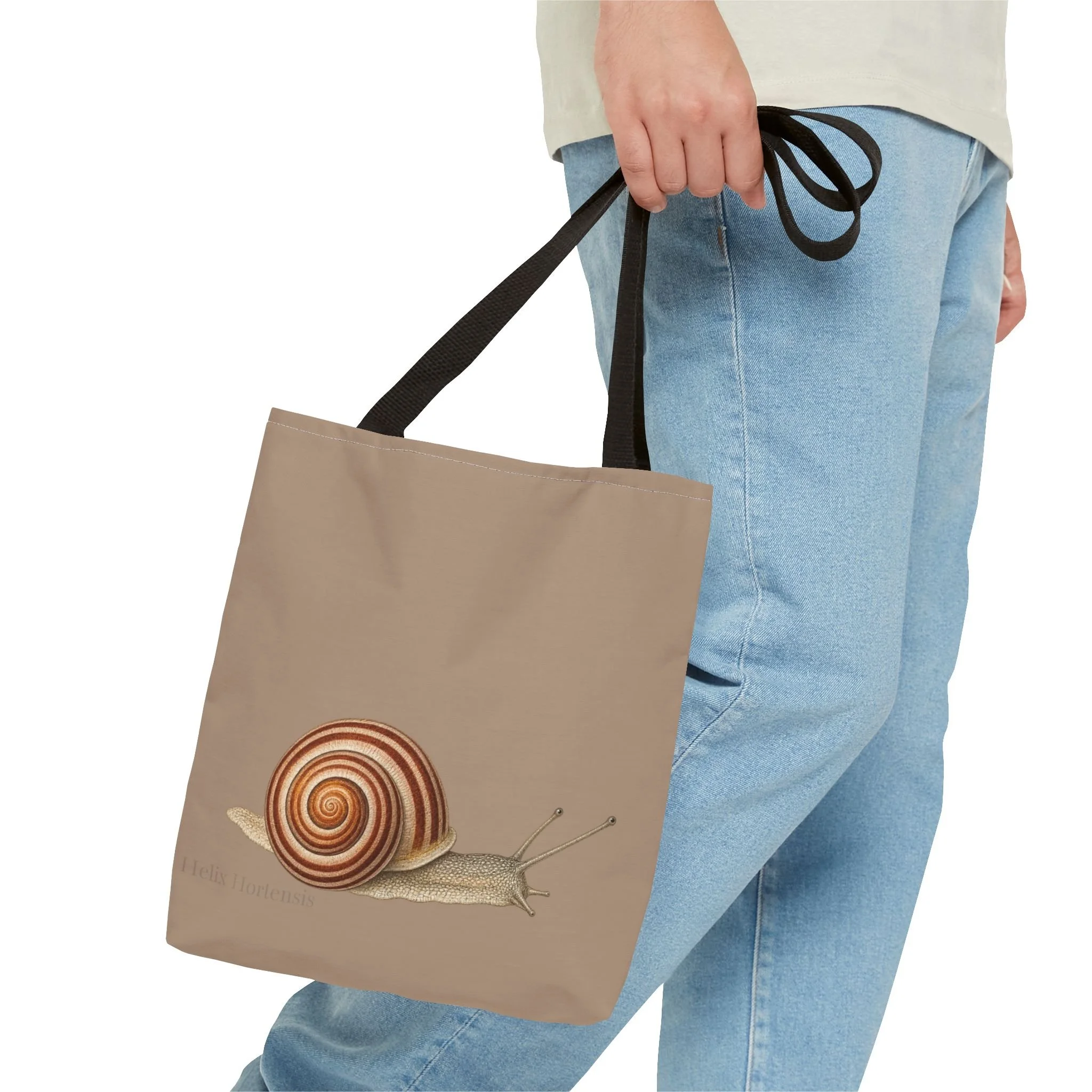 Image 3 of 12
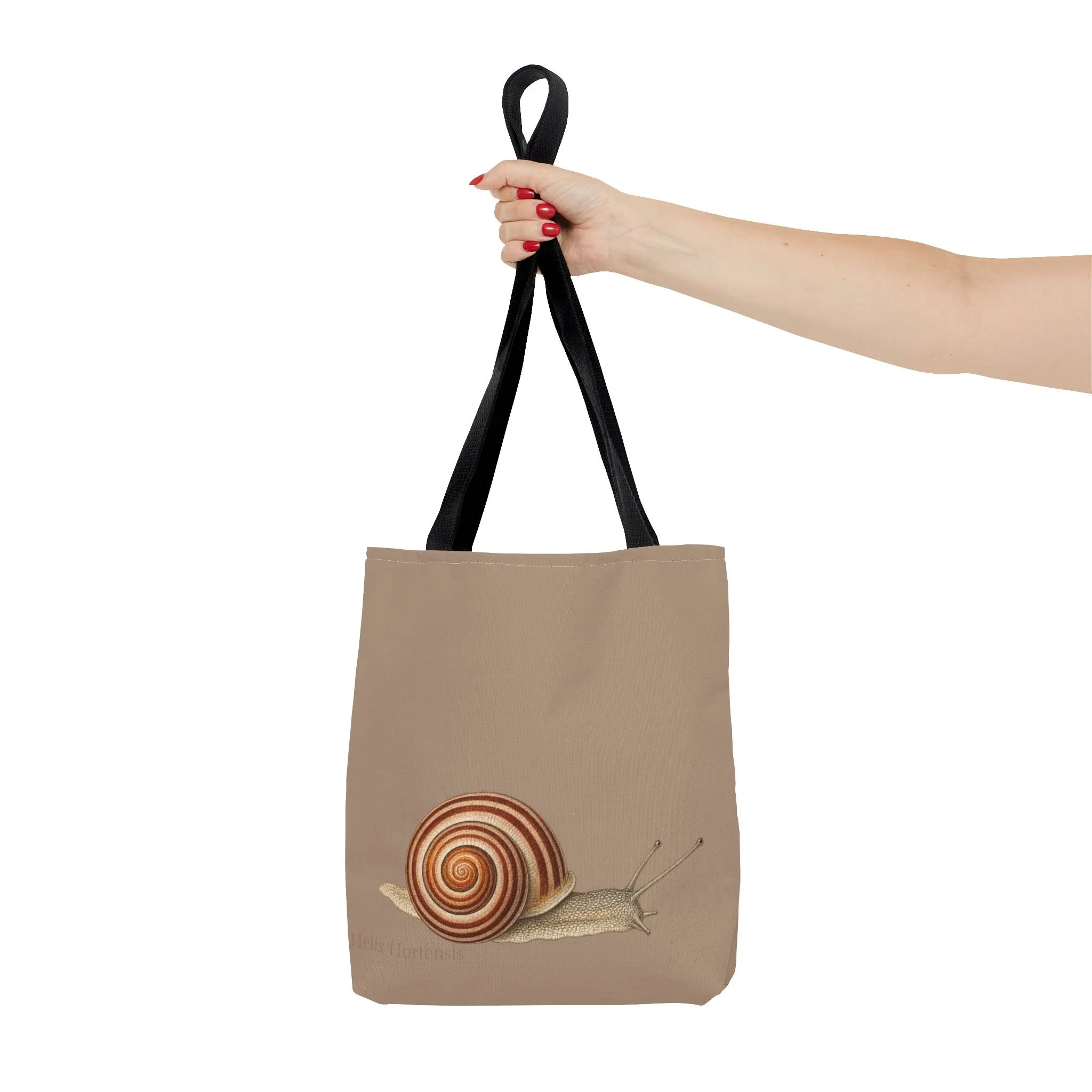 Image 4 of 12
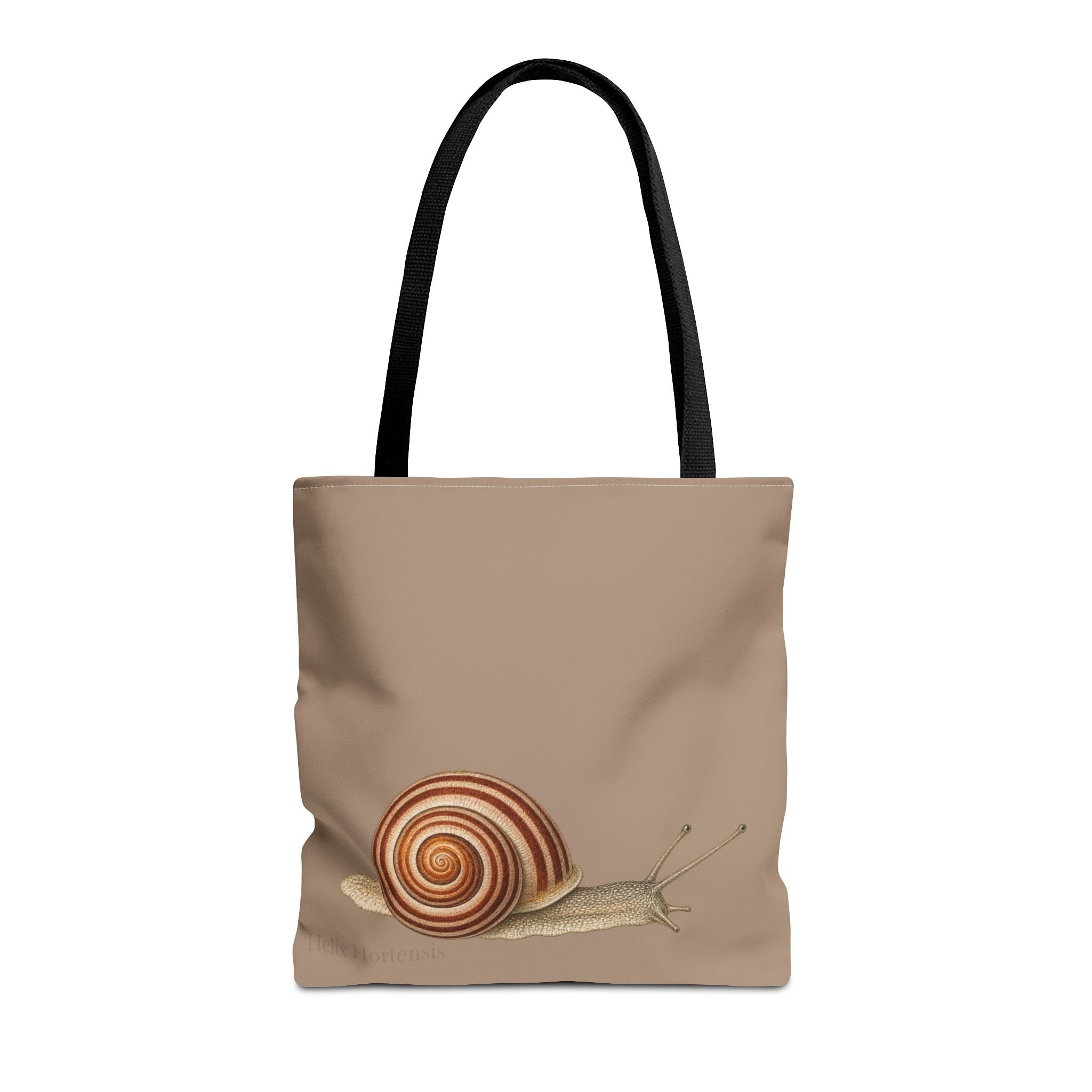 Image 5 of 12
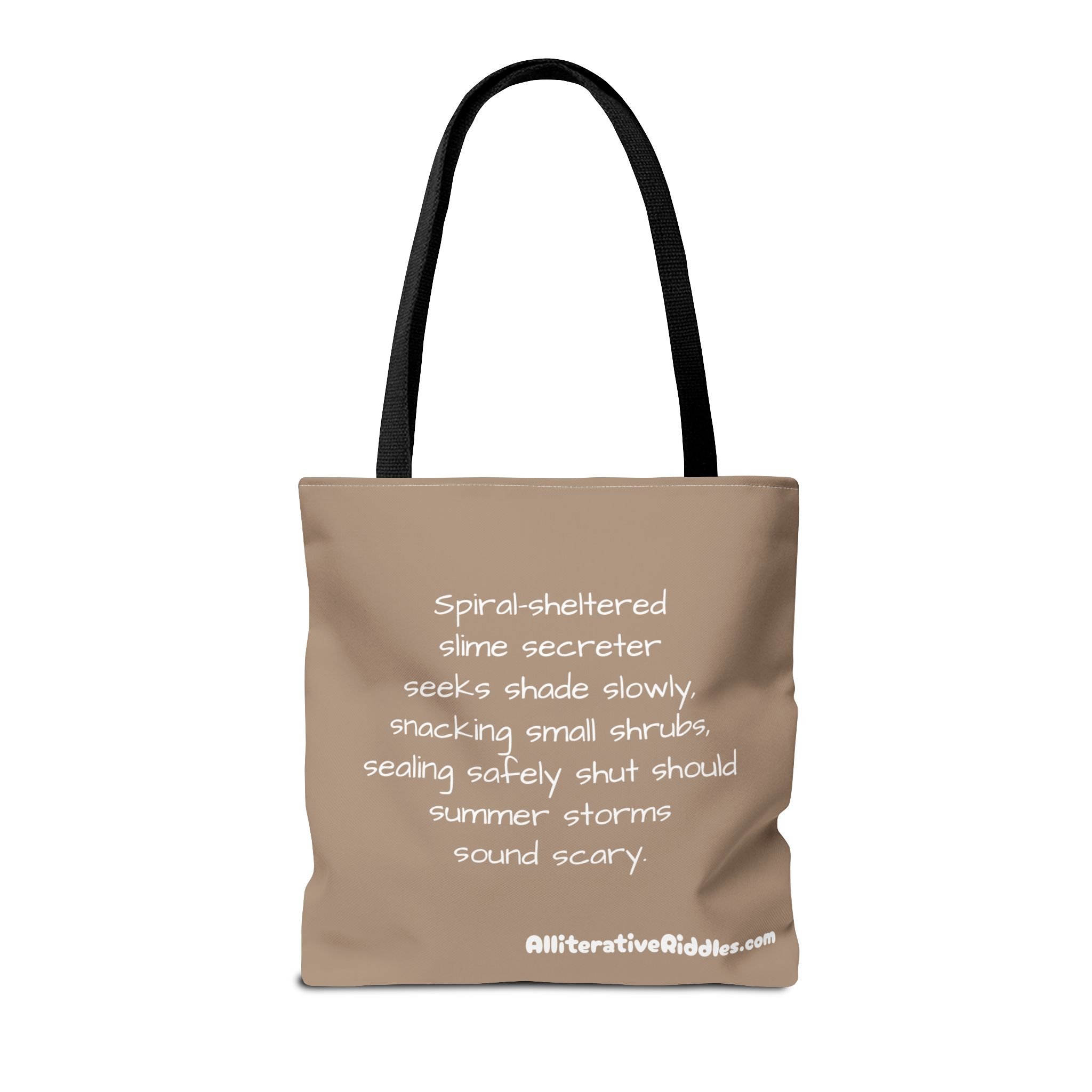 Image 6 of 12
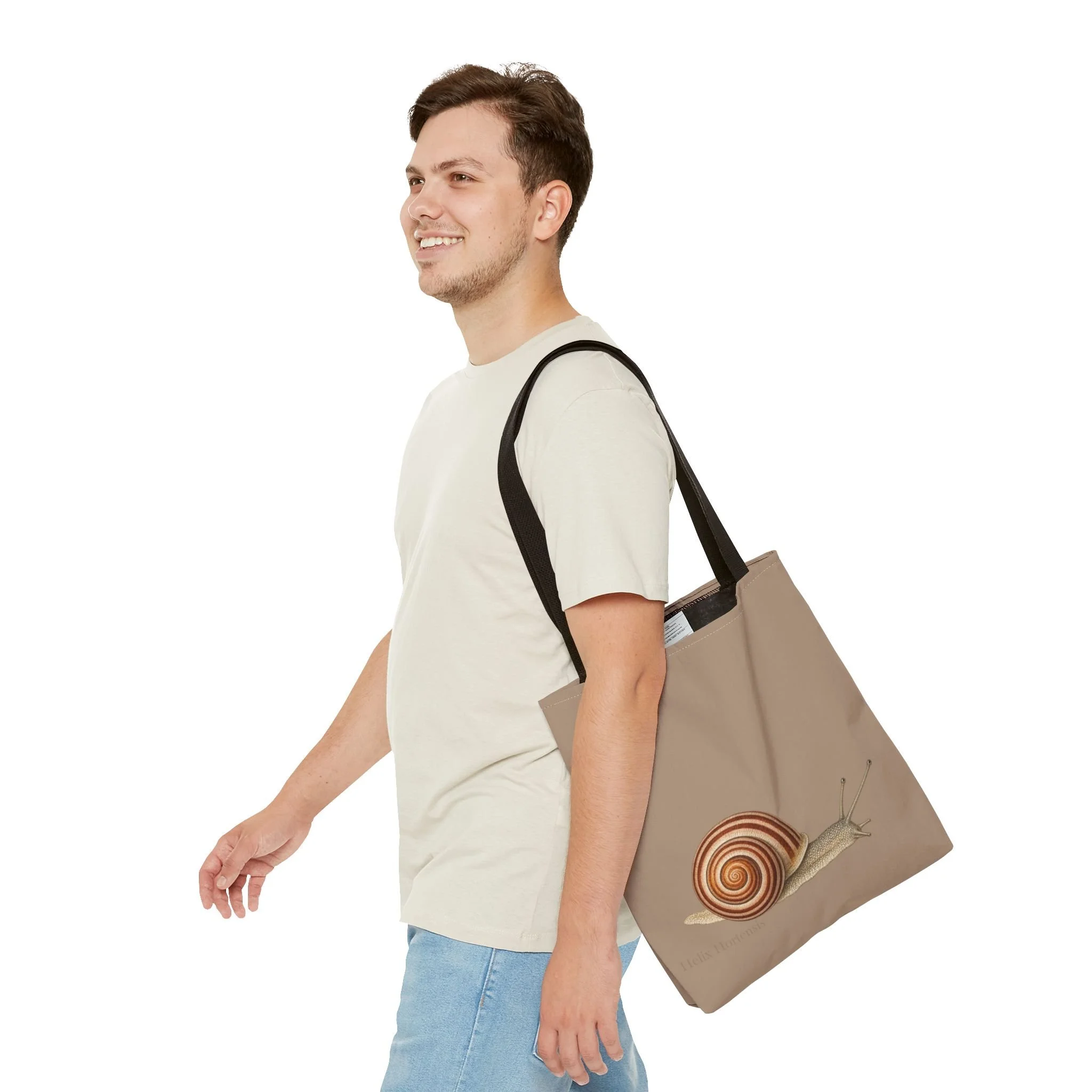 Image 7 of 12
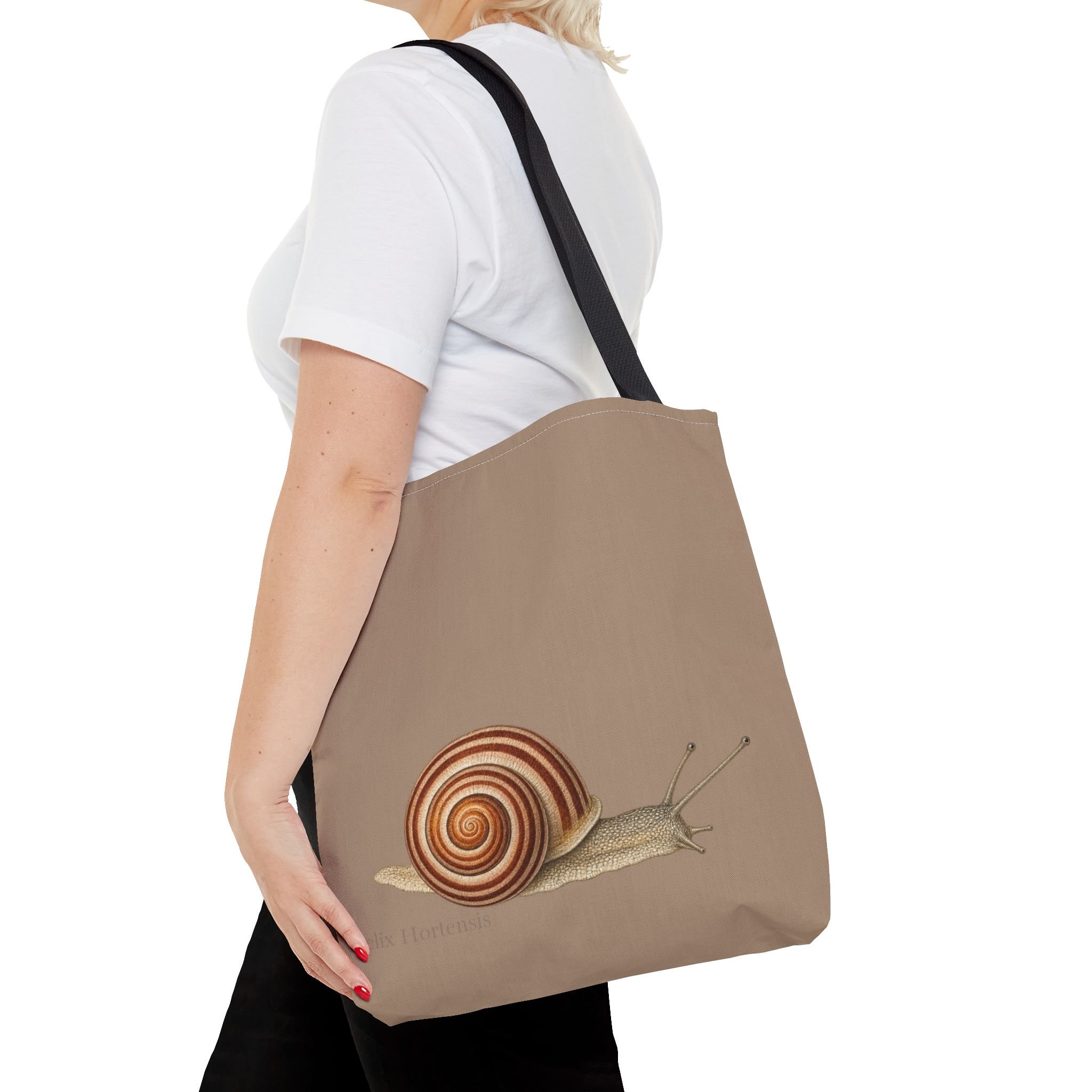 Image 8 of 12
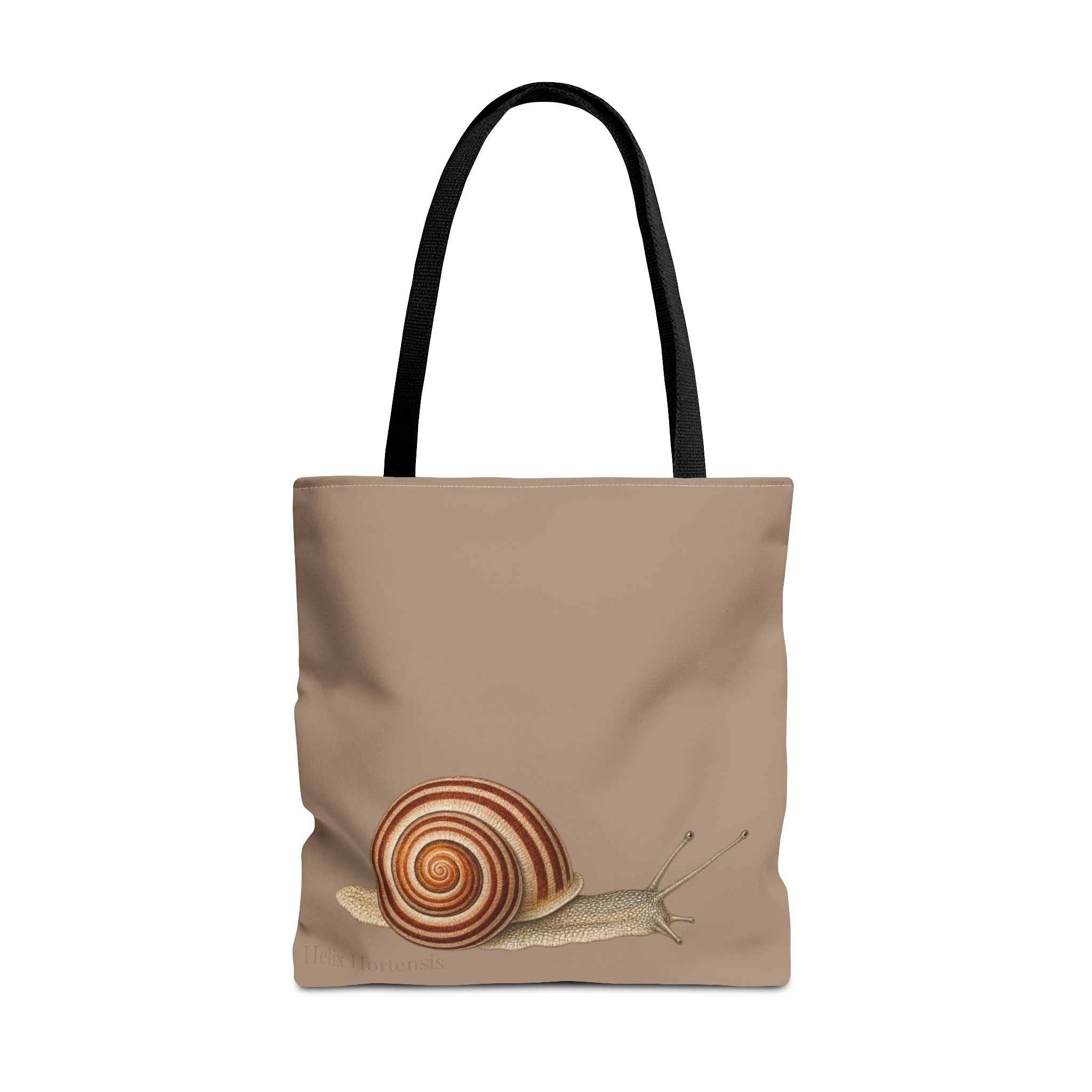 Image 9 of 12
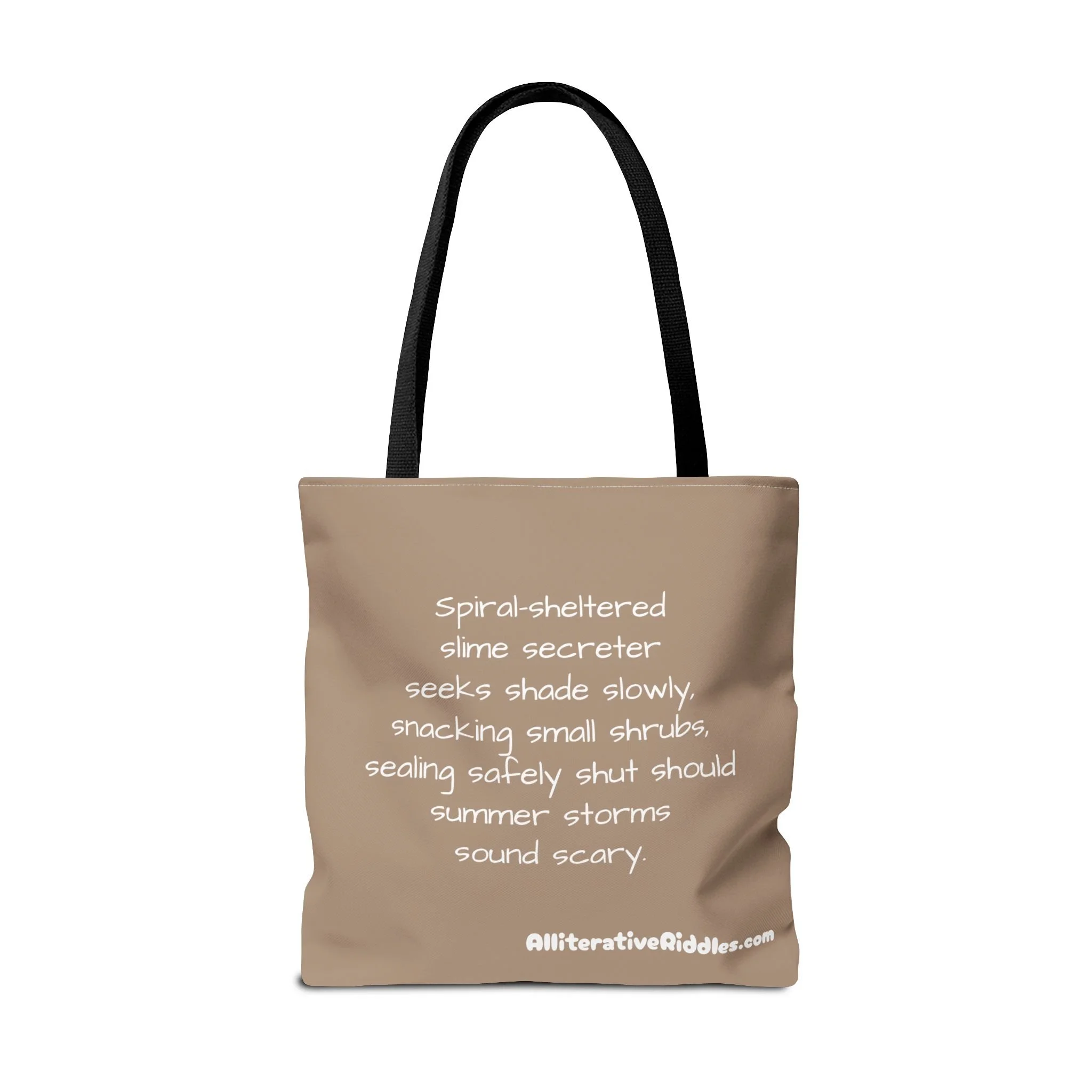 Image 10 of 12
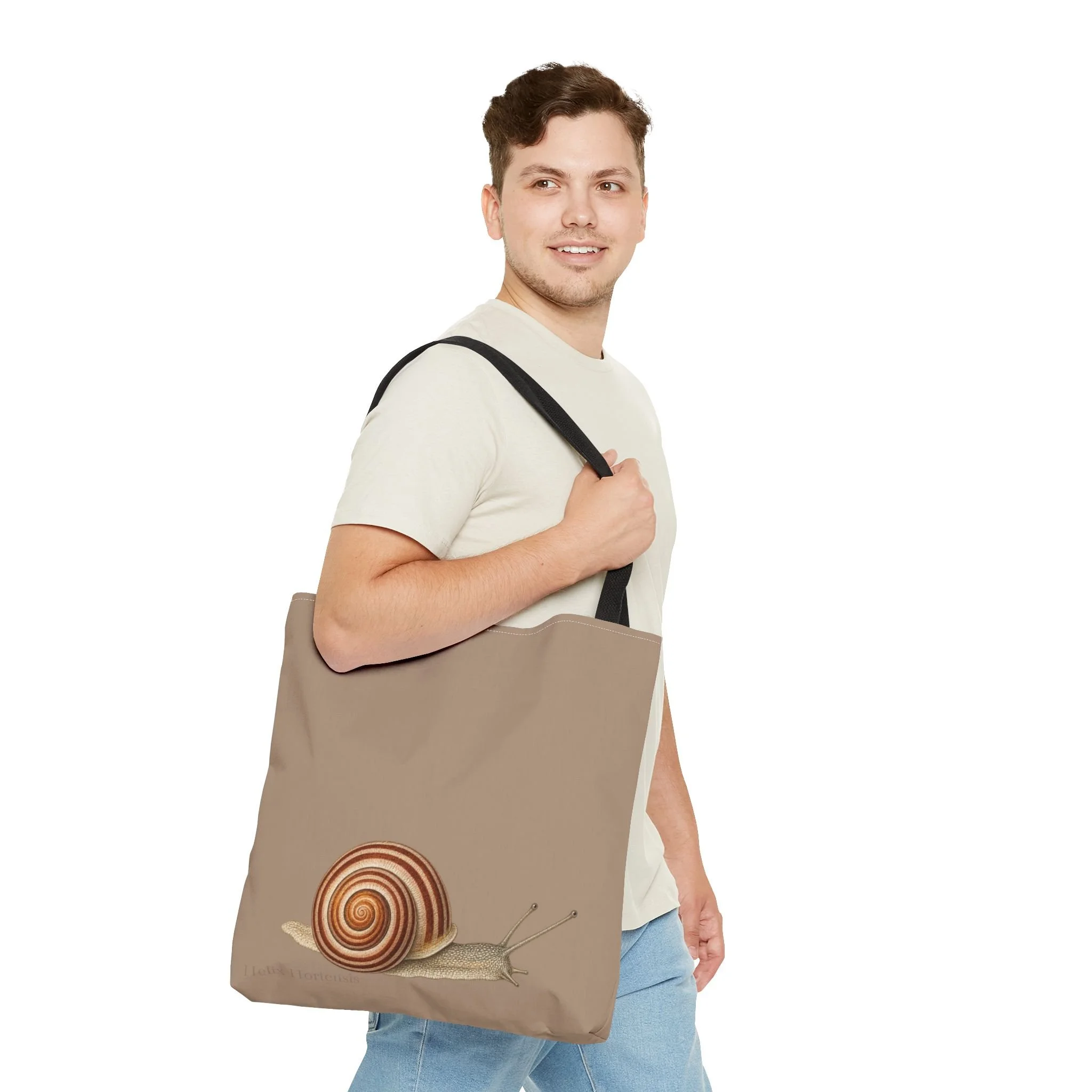 Image 11 of 12
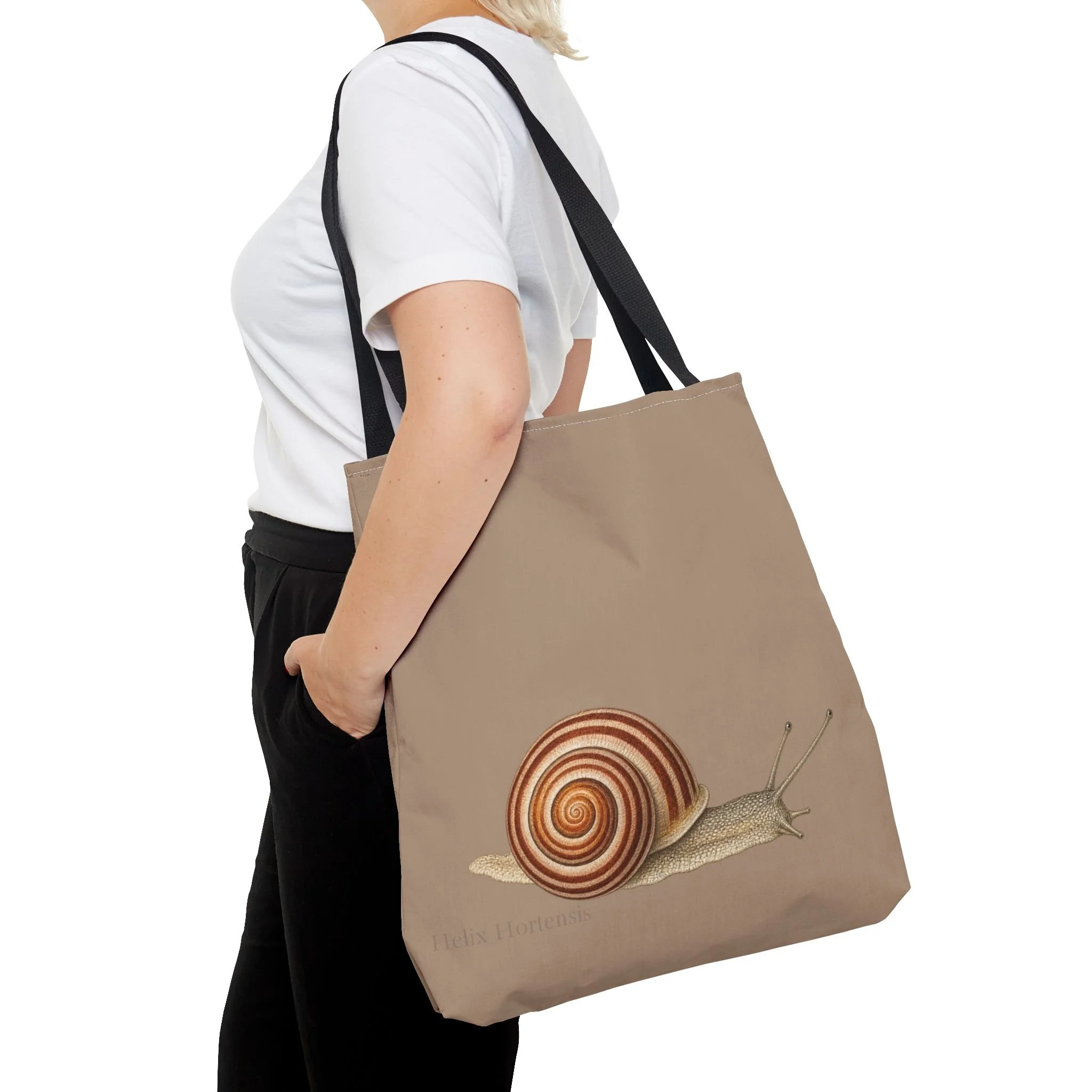 Image 12 of 12