Chipmunk and Corn Tote Bag
Chipmunk, by Isaac Sprague (1811–1895), ca. 1840s. Original watercolor natural-history illustration depicting a chipmunk perched on an ear of corn. Reproduced in Sprague's Natural History, BibliOdyssey.
Chipmunks collect seeds, nuts, and berries, carrying their food in expandable cheek pouches that can swell to several times their normal size. They transport these supplies to underground burrows containing separate chambers for nesting and food storage. Unlike animals that remain dormant throughout winter, eastern chipmunks enter periods of torpor, periodically awakening to eat their stored food. Their distinctive stripes help camouflage them among leaves, grasses, and forest-floor vegetation.
Product Details
· Size: 13″ × 13″
· Durable 100% spun polyester
· Medium-weight fabric (6.49 oz/yd²; 200 g/m²)
· Double-stitched seams
· Cotton webbing handles
· Nonwoven laminated interior lining
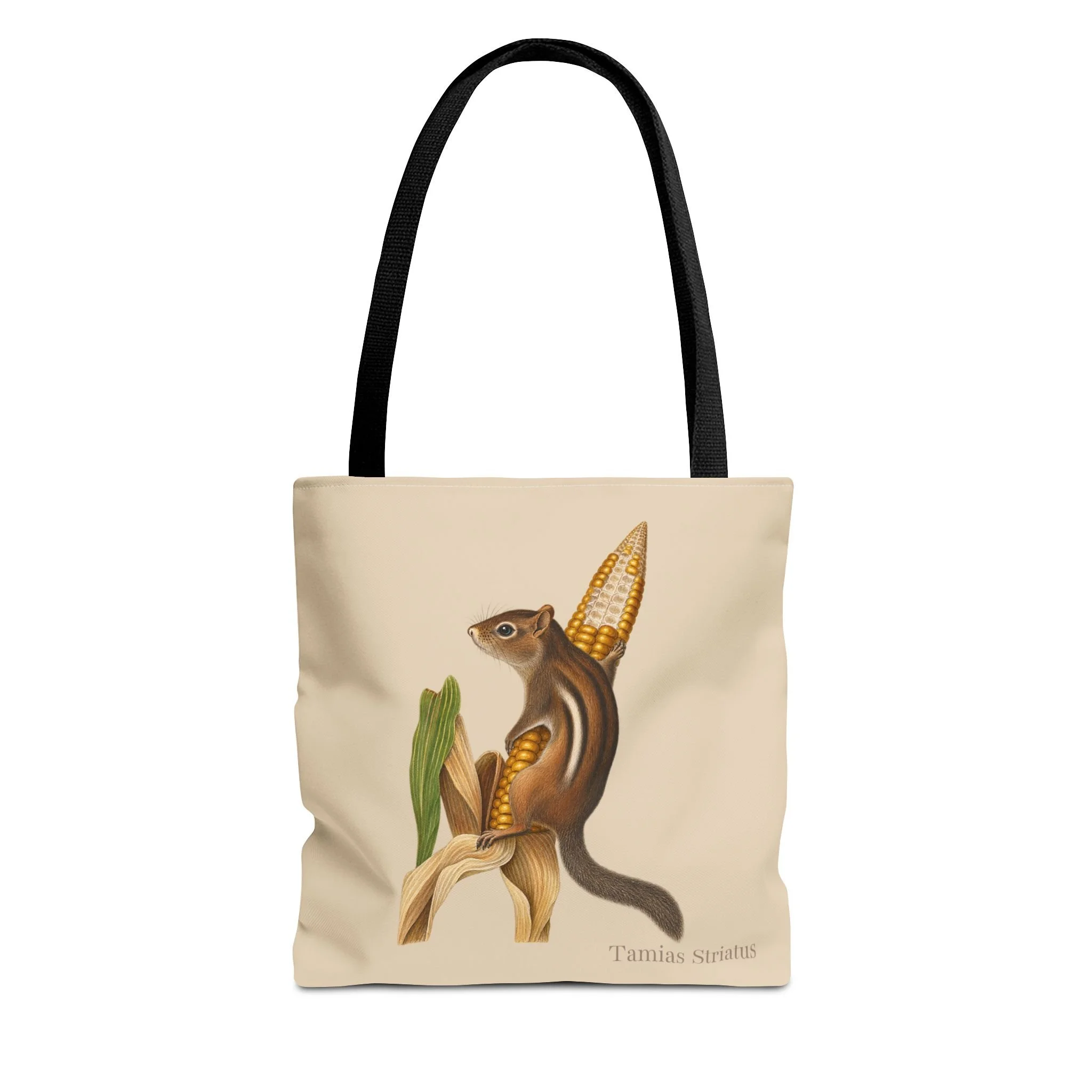 Image 1 of 12
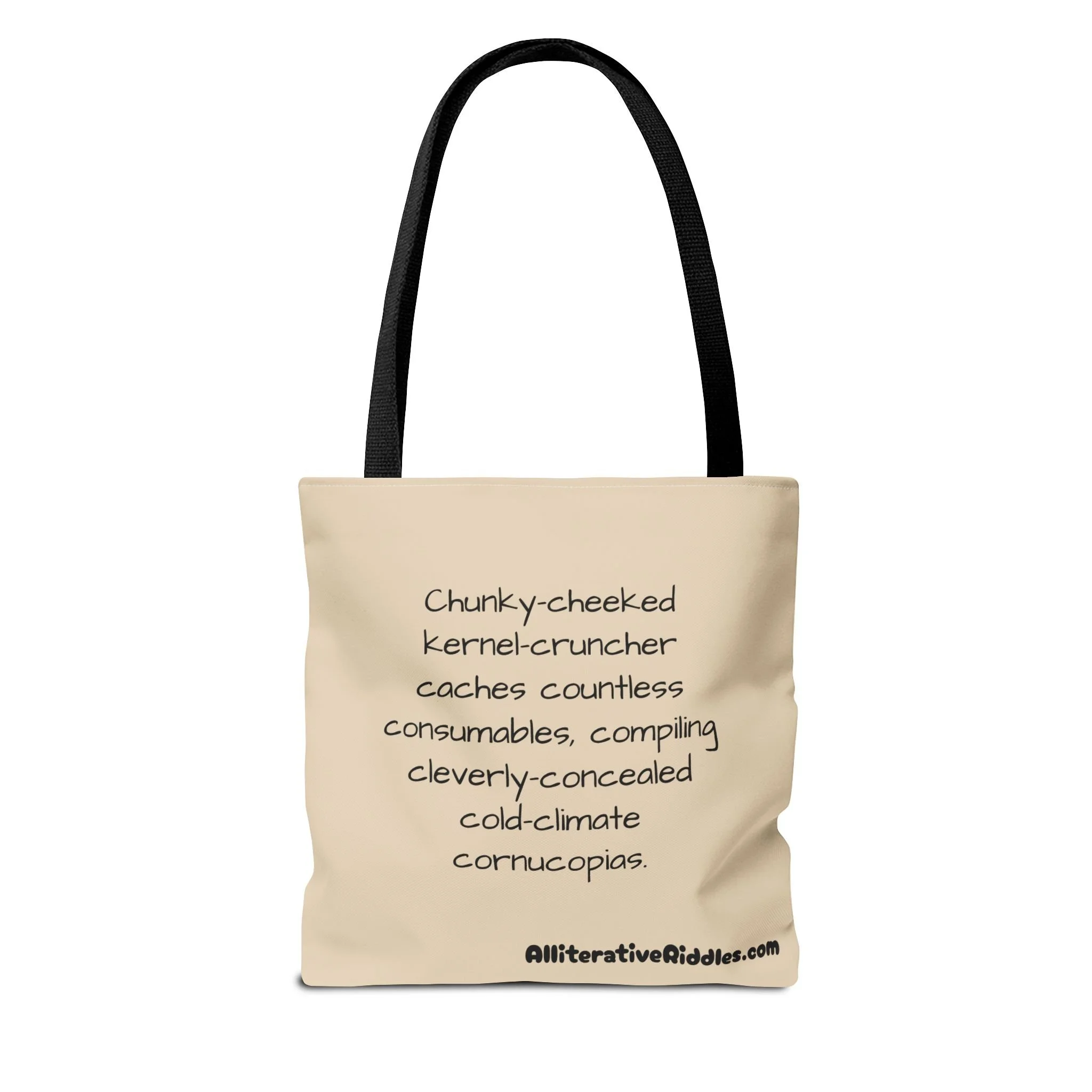 Image 2 of 12
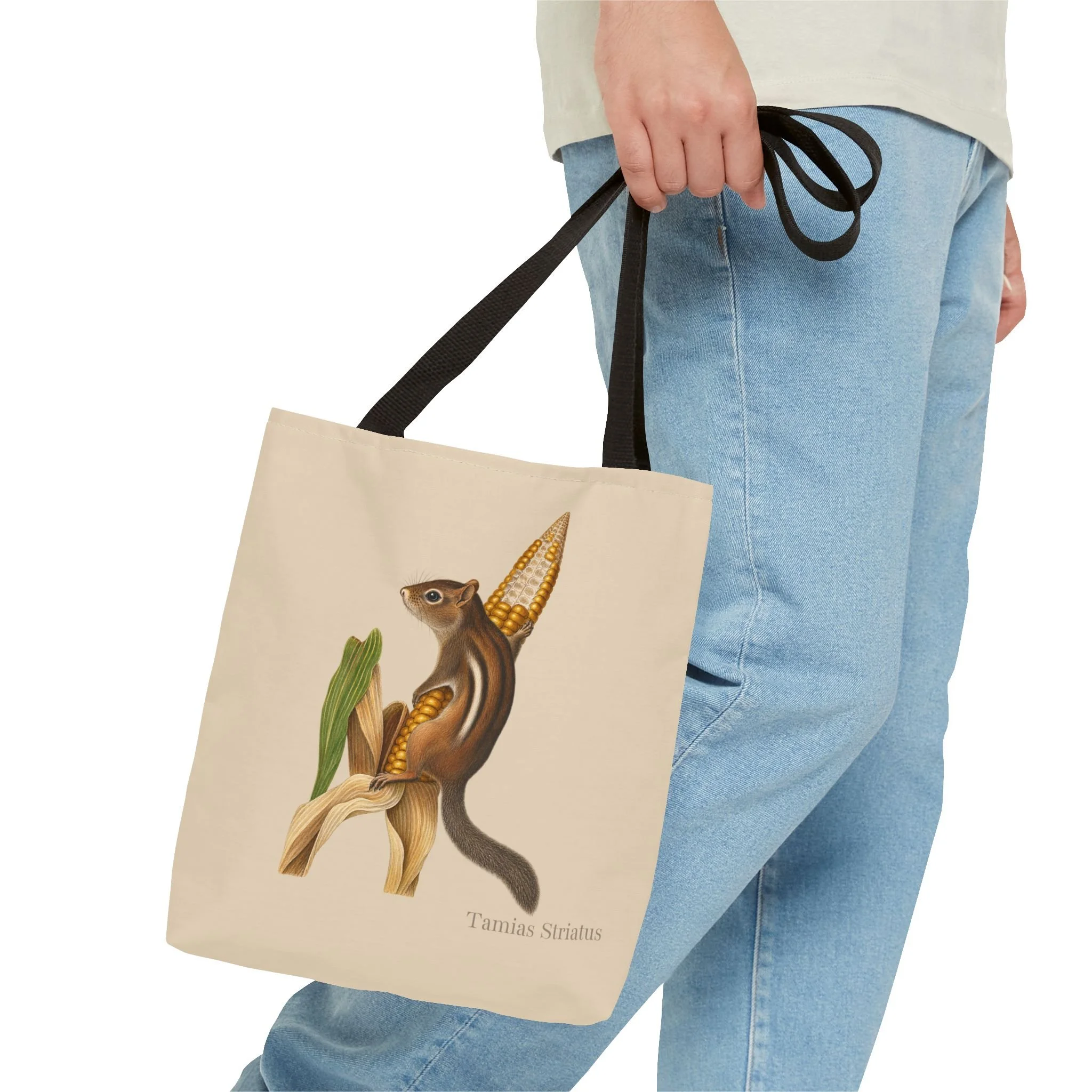 Image 3 of 12
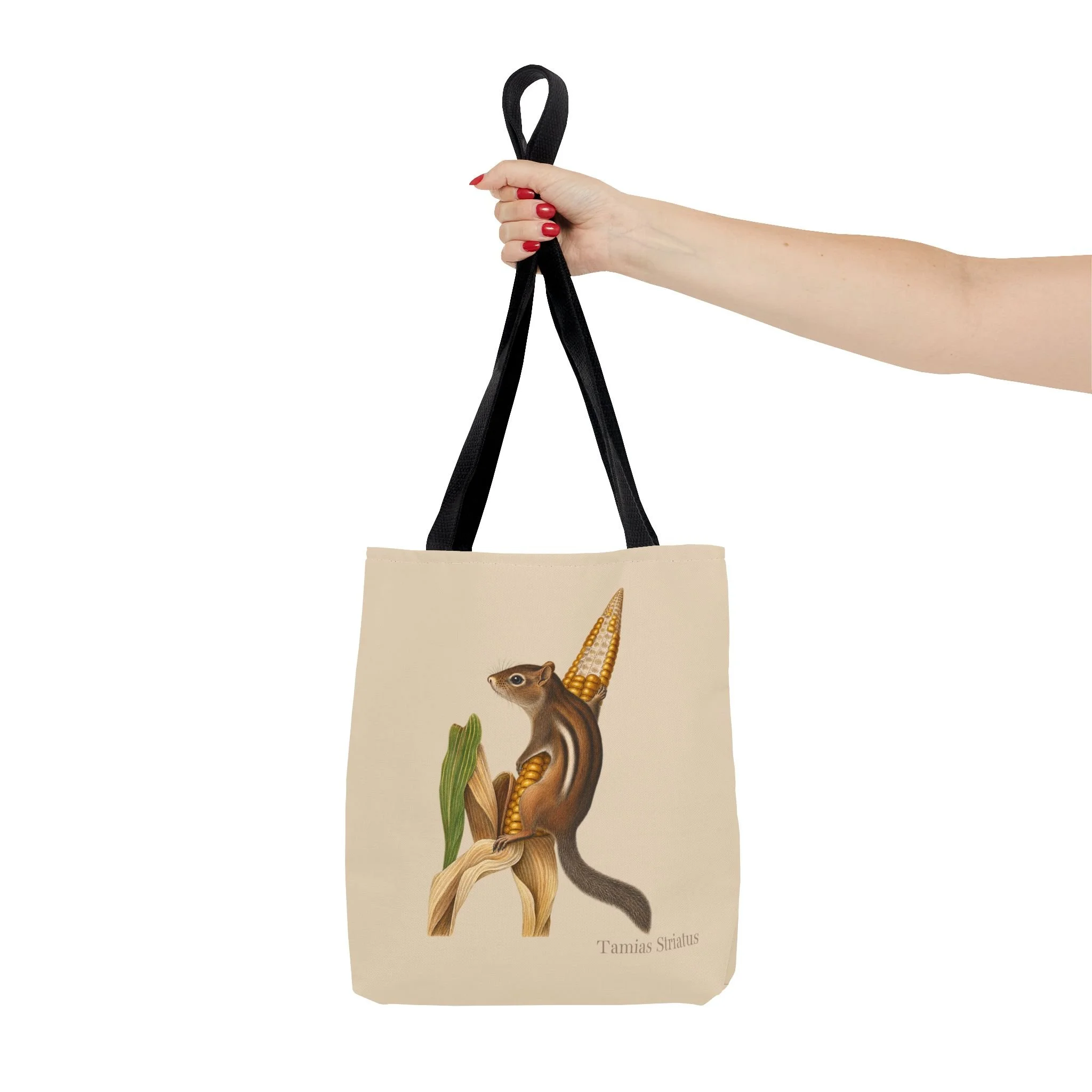 Image 4 of 12
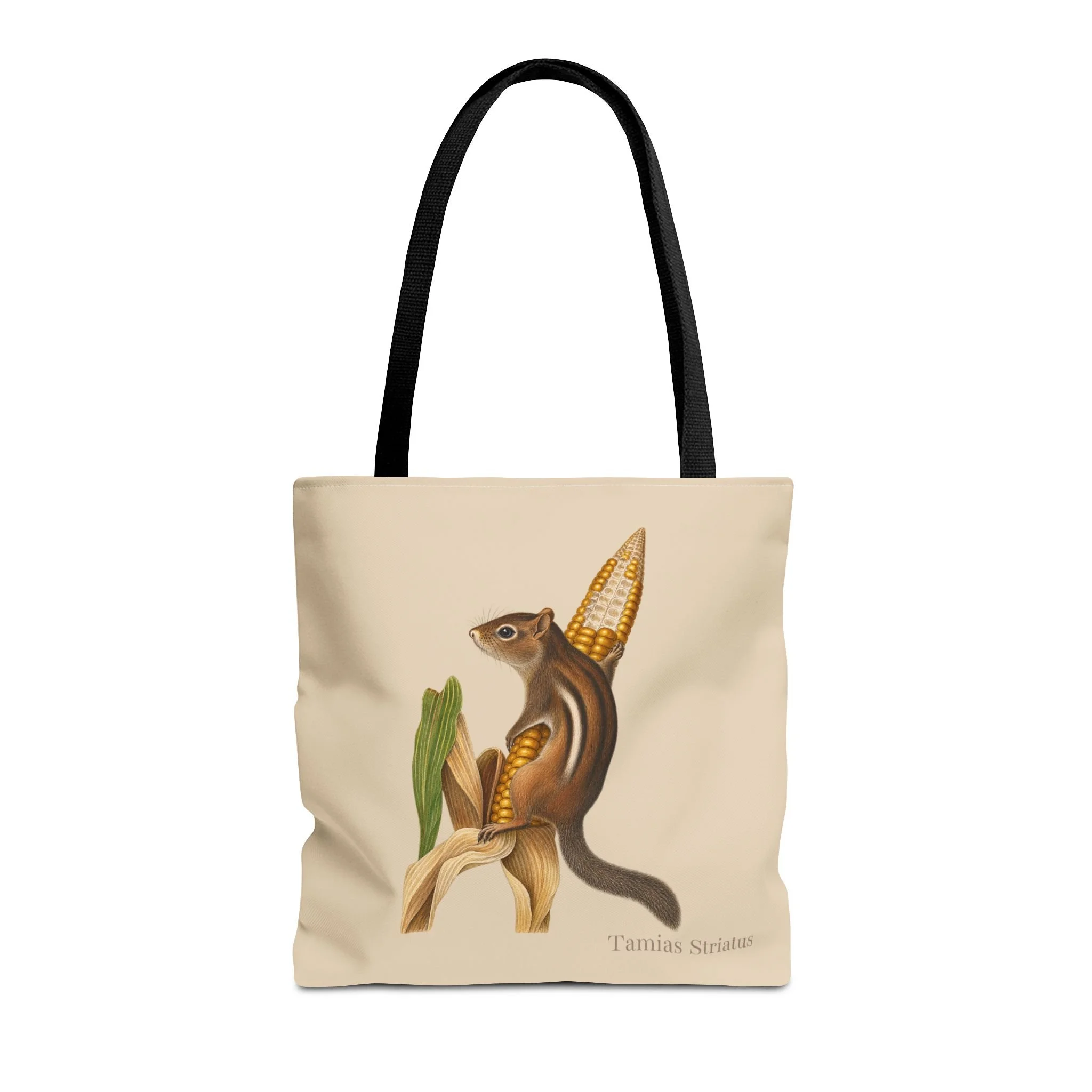 Image 5 of 12
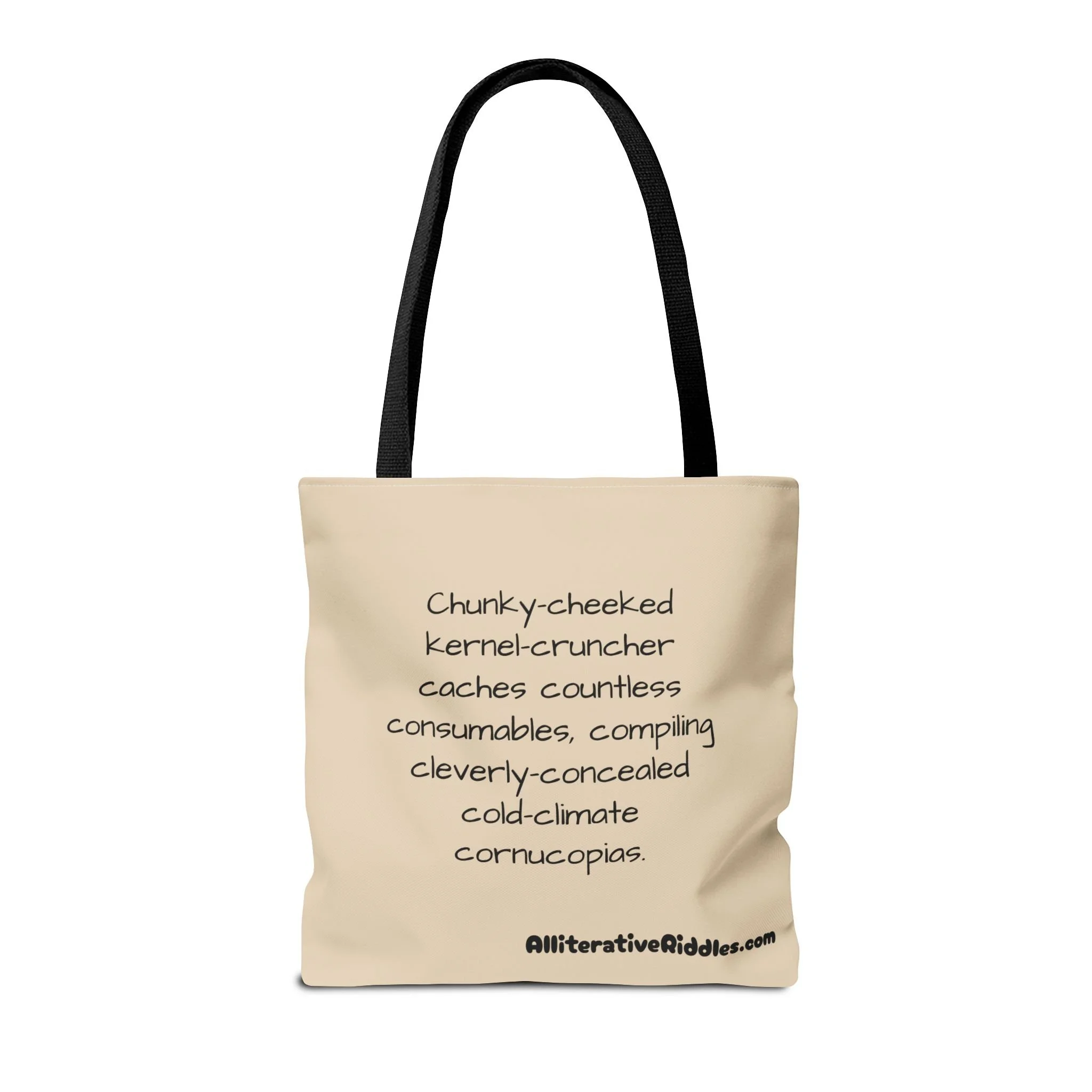 Image 6 of 12
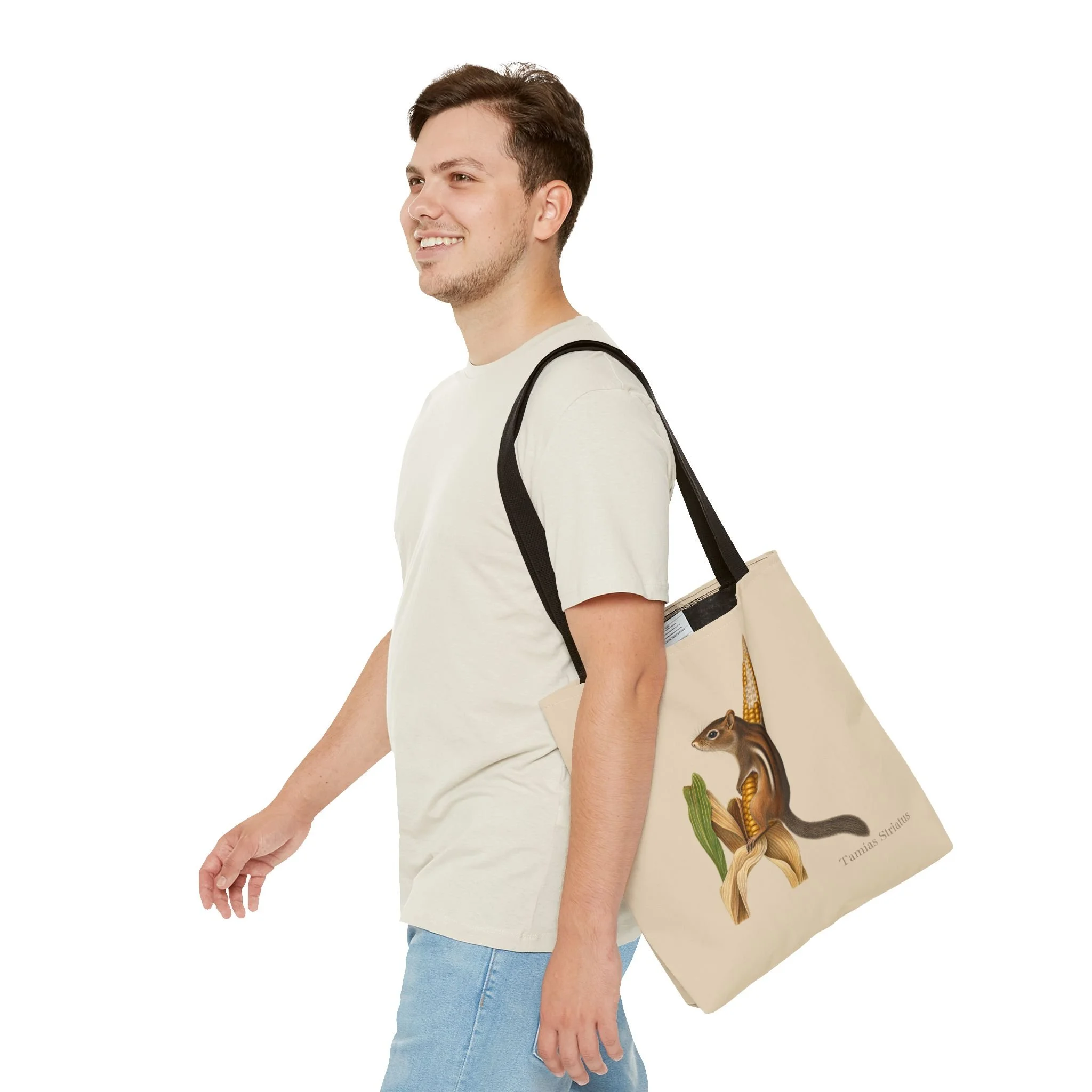 Image 7 of 12
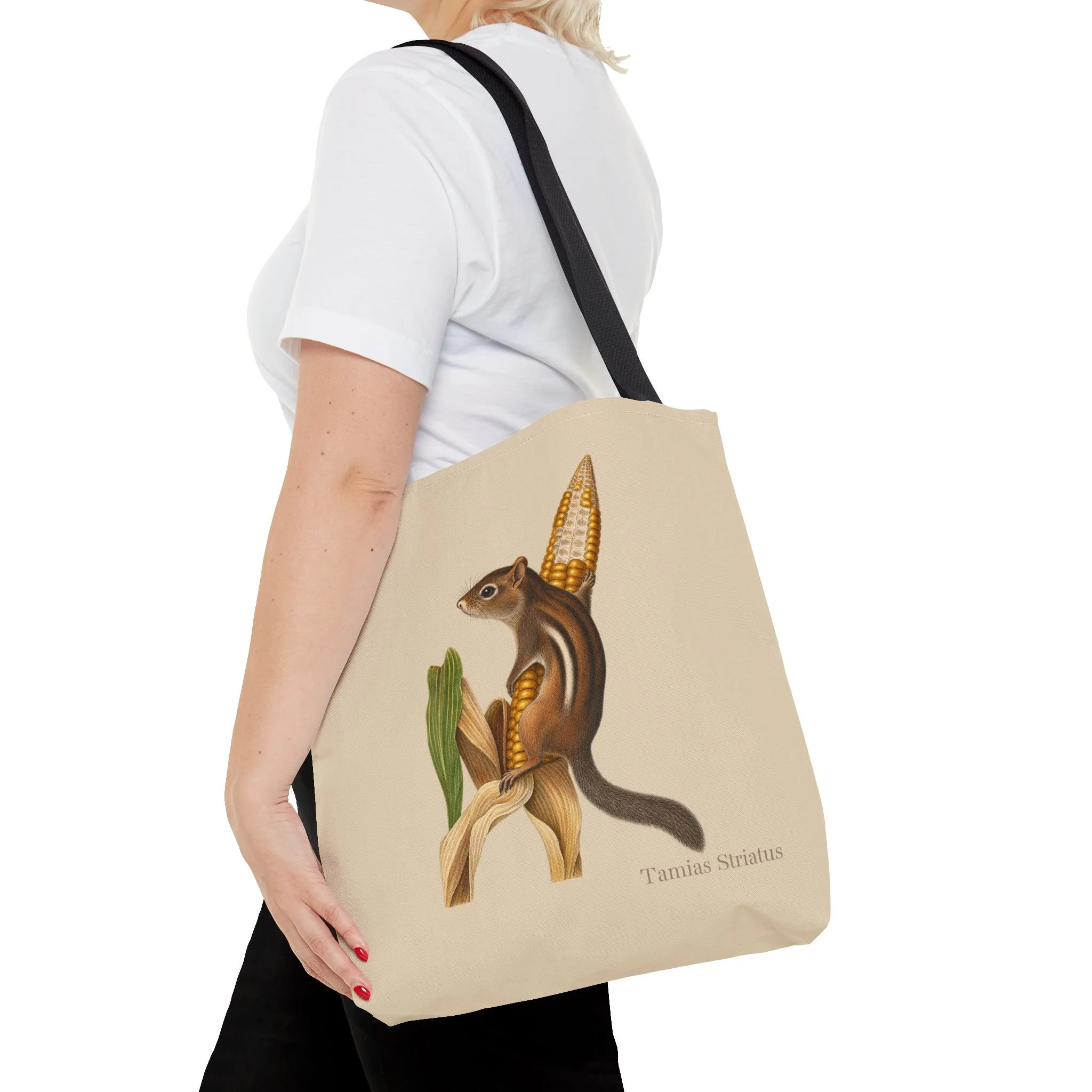 Image 8 of 12
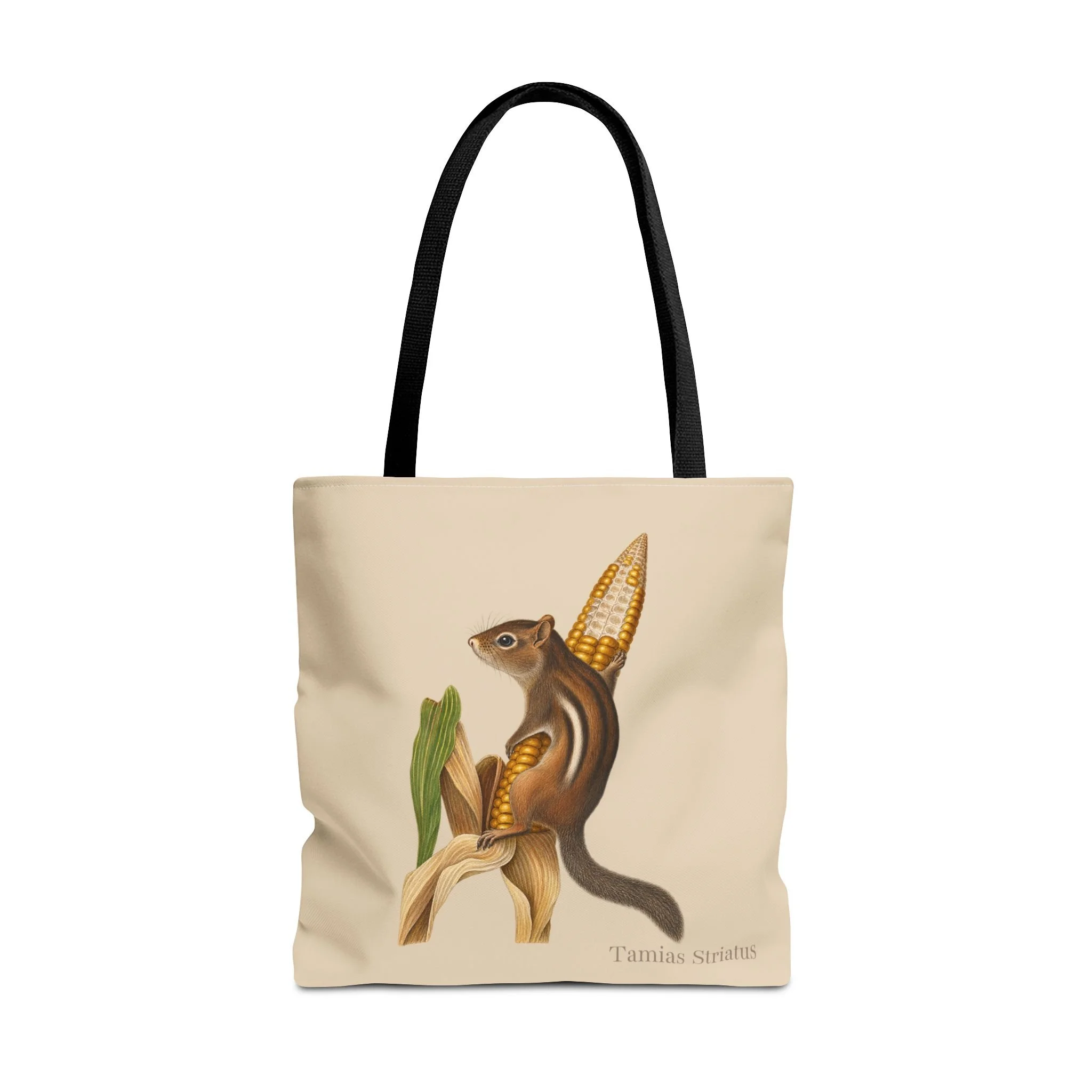 Image 9 of 12
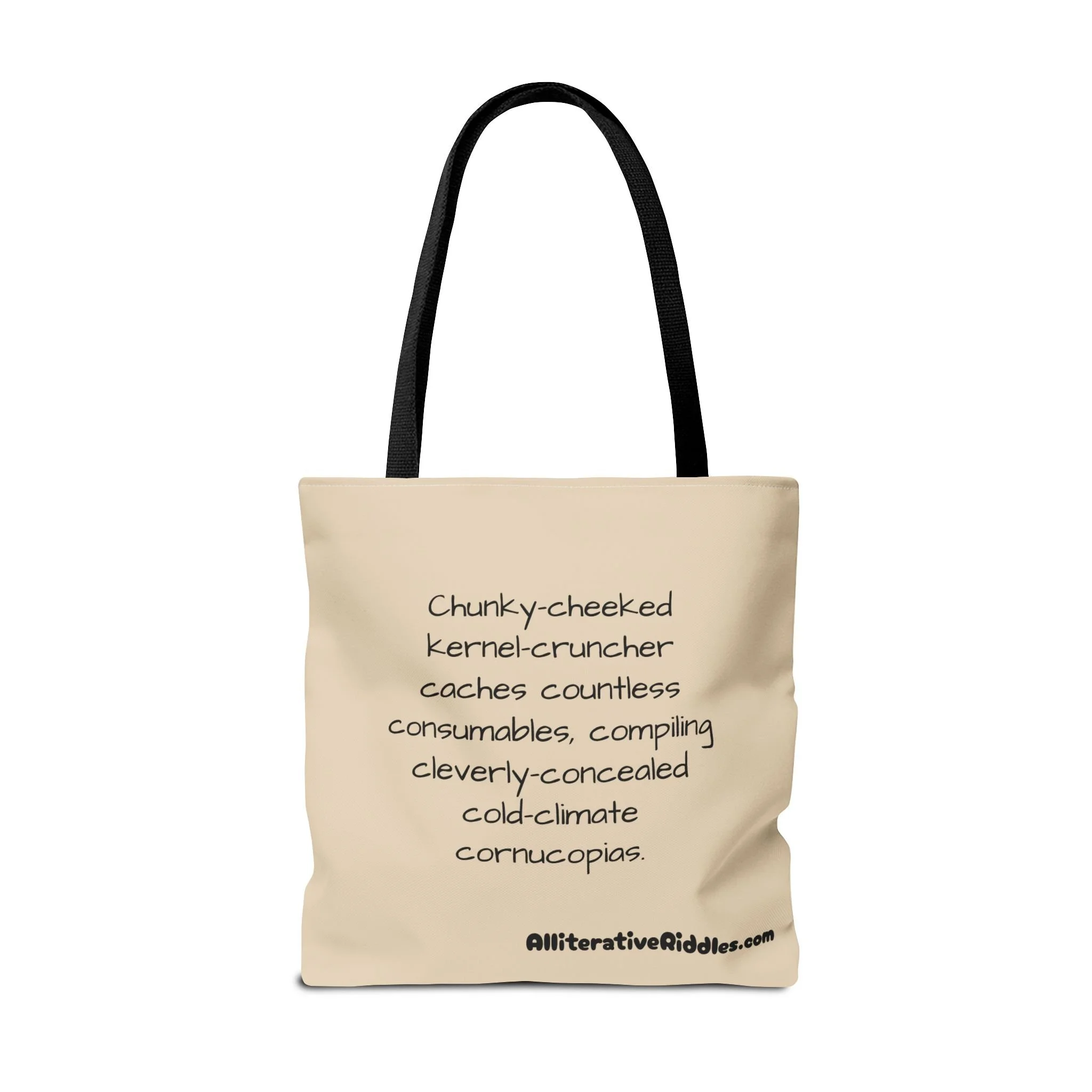 Image 10 of 12
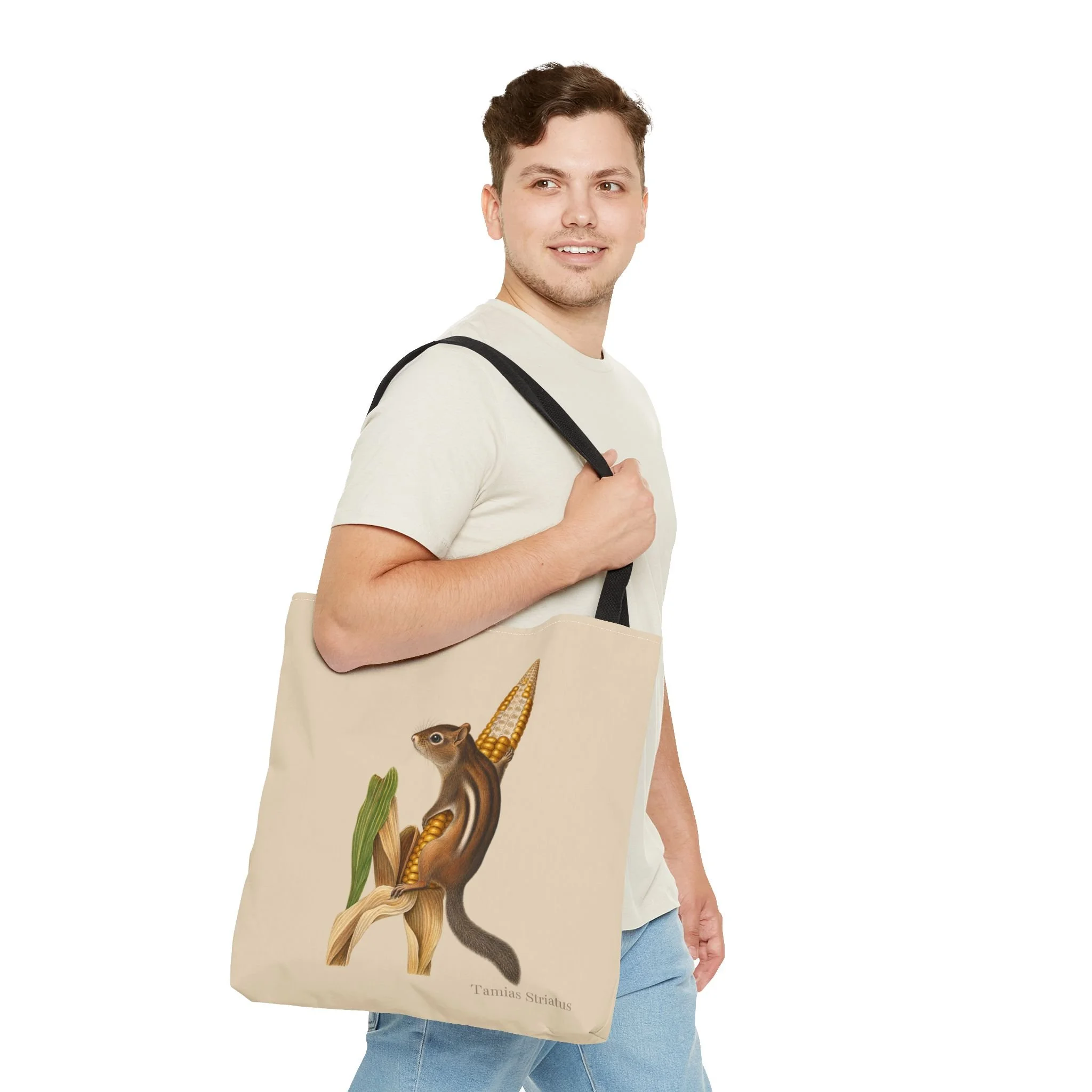 Image 11 of 12
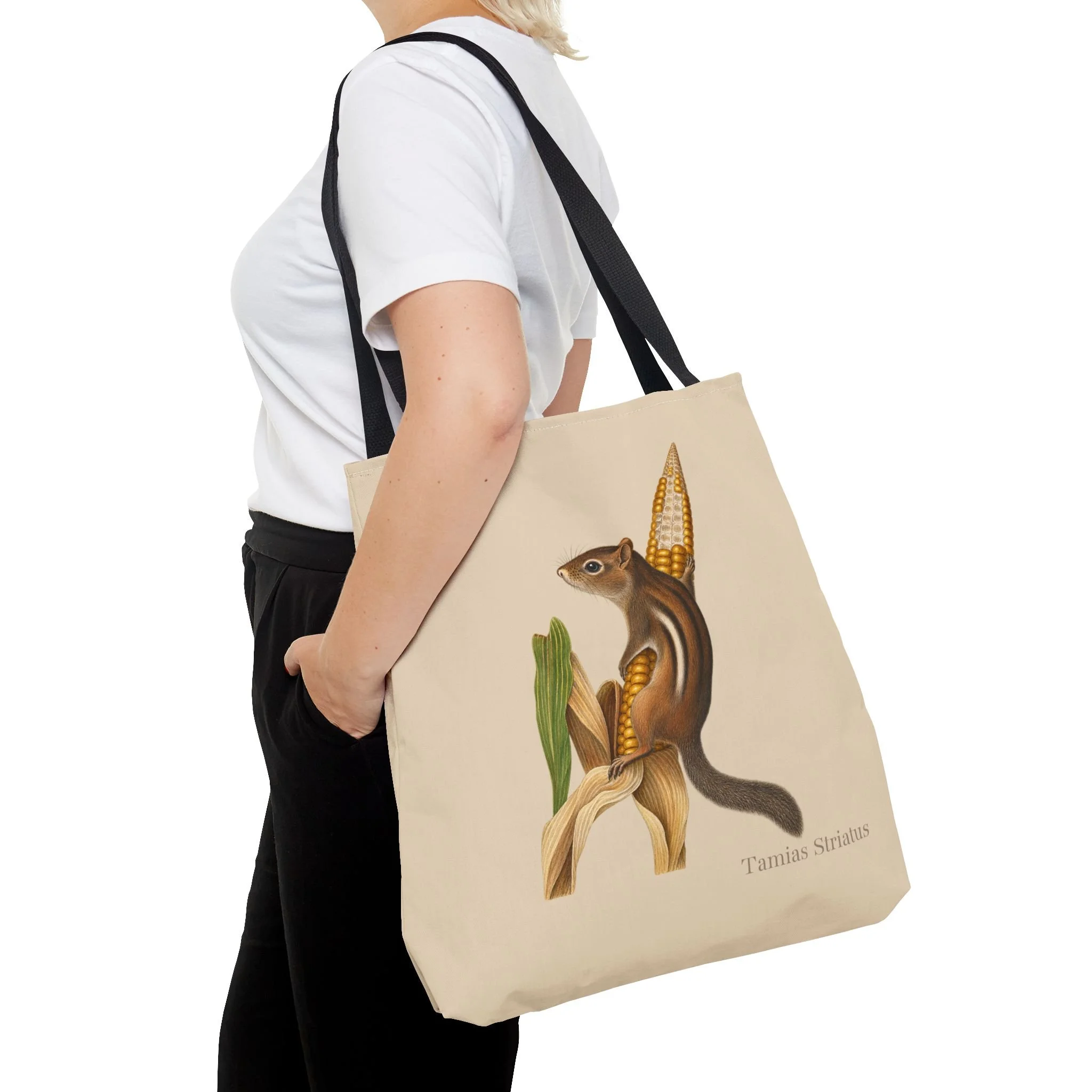 Image 12 of 12