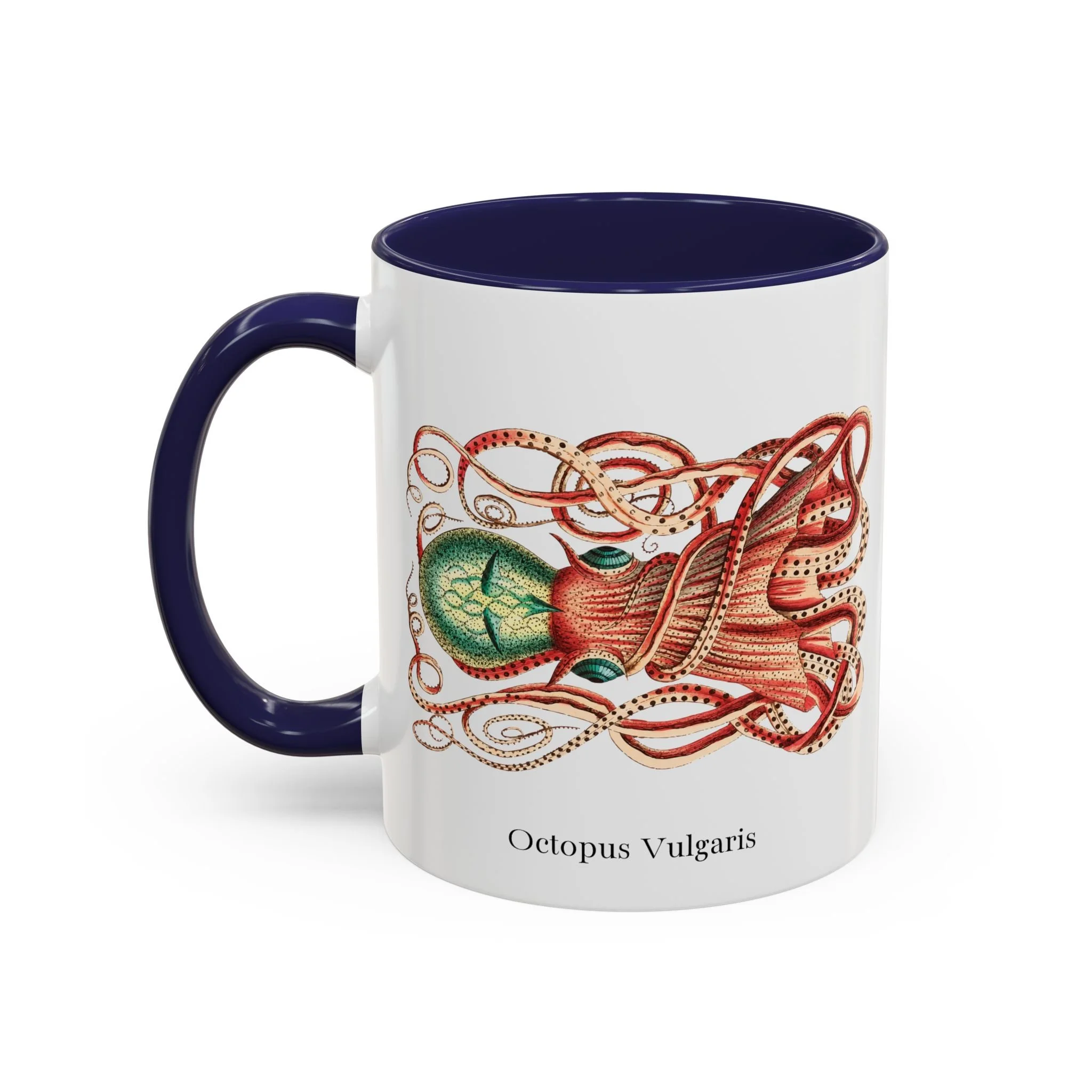
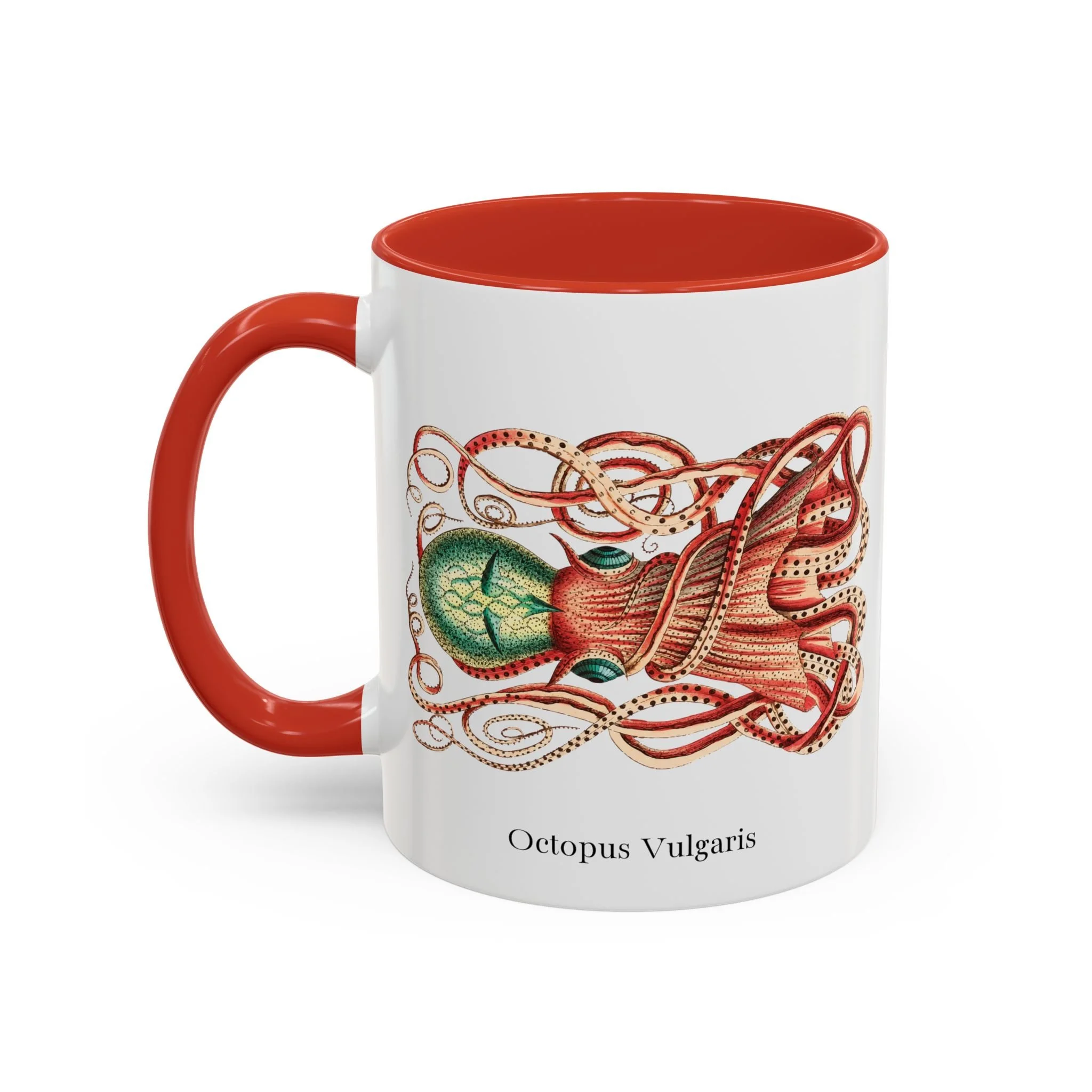
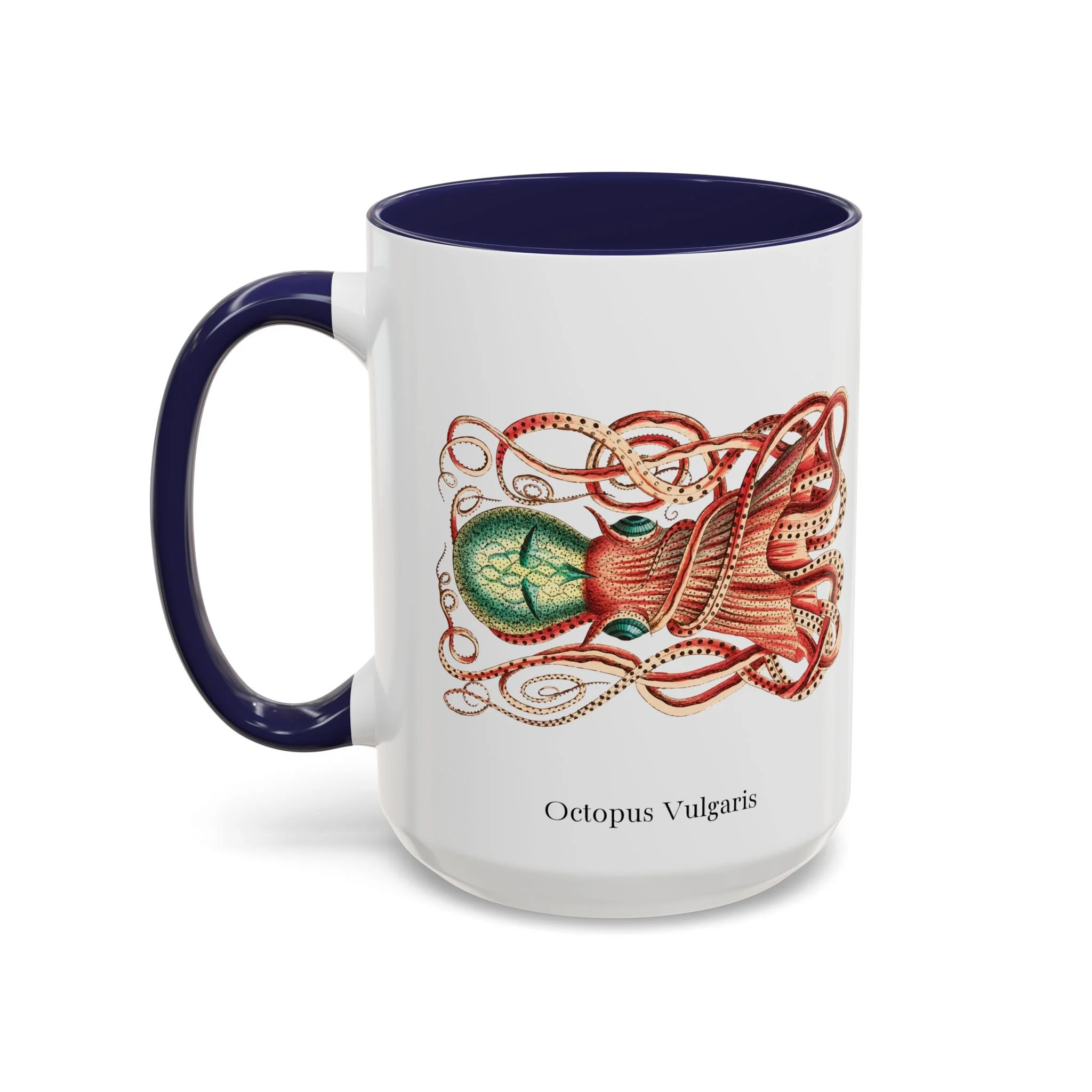
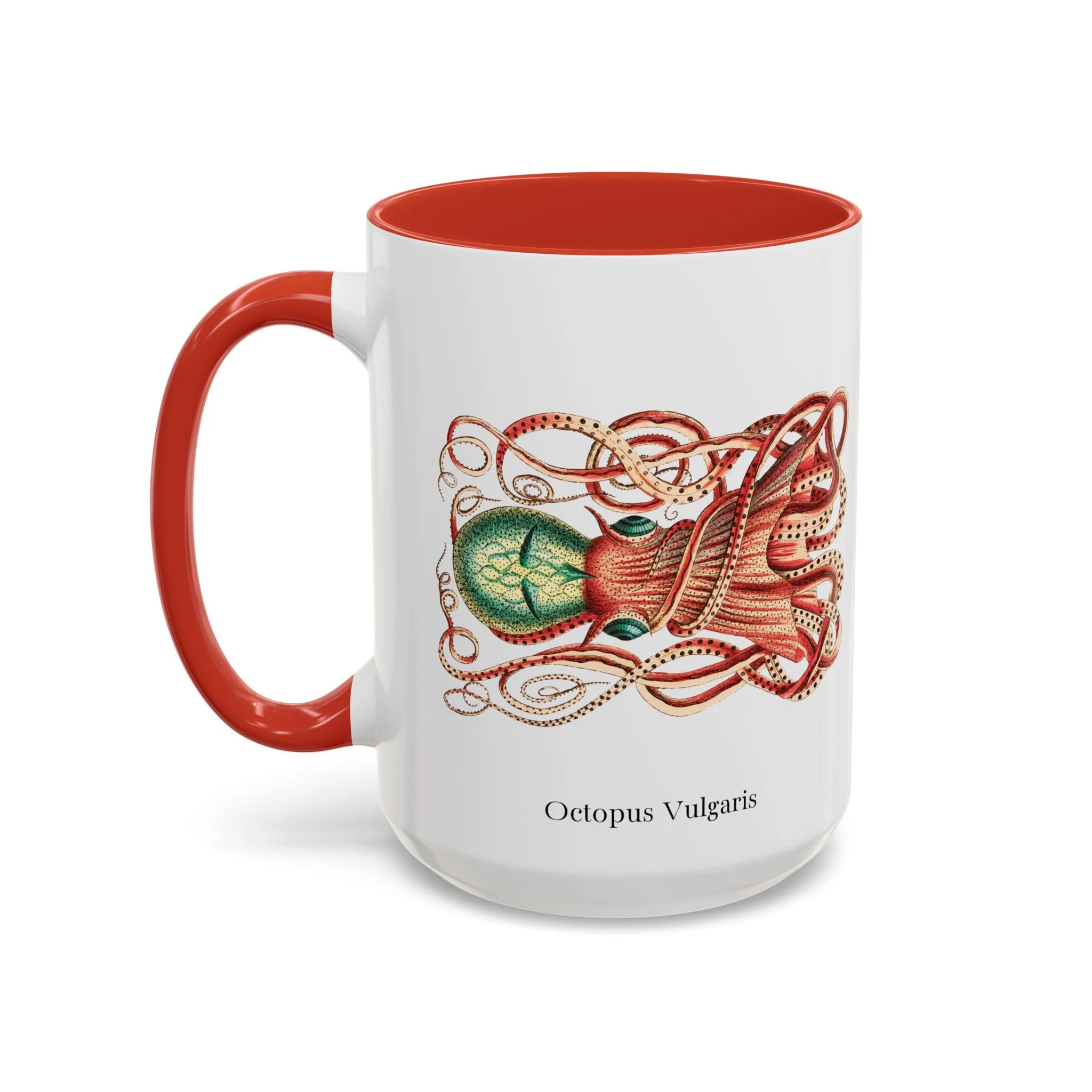
Granulated Cuttle Mug
The Granulated Cuttle (Sepia granulata), from George Shaw's The Naturalist's Miscellany, volume 18, plate 780 (1806–1807). Hand-colored natural-history engraving from the workshop of Elizabeth and Richard Polydore Nodder.
The granulated cuttle, now classified as the common octopus (Octopus vulgaris), inhabits rocky coastal waters and seabeds, where it hunts crabs, mollusks, and other small animals. Its eight arms bear two rows of suckers capable of gripping objects and detecting chemicals through touch. Specialized pigment cells allow it to rapidly change color, while muscular structures in its skin alter its texture to resemble rocks, coral, or surrounding vegetation. With no rigid skeleton, it can squeeze through openings scarcely larger than its hard beak. During reproduction, females may lay more than 100,000 eggs, guarding and cleaning them for months without feeding before dying shortly after they hatch.
Product details
-
White ceramic mug with pink interior and handle
-
Flamingo illustration and original alliterative riddle
-
Available in 11 oz and 15 oz sizes
-
Glossy finish
-
Microwave and dishwasher safe
Part of the Alliterative Riddles collection.
Discover more at AlliterativeRiddles.com.


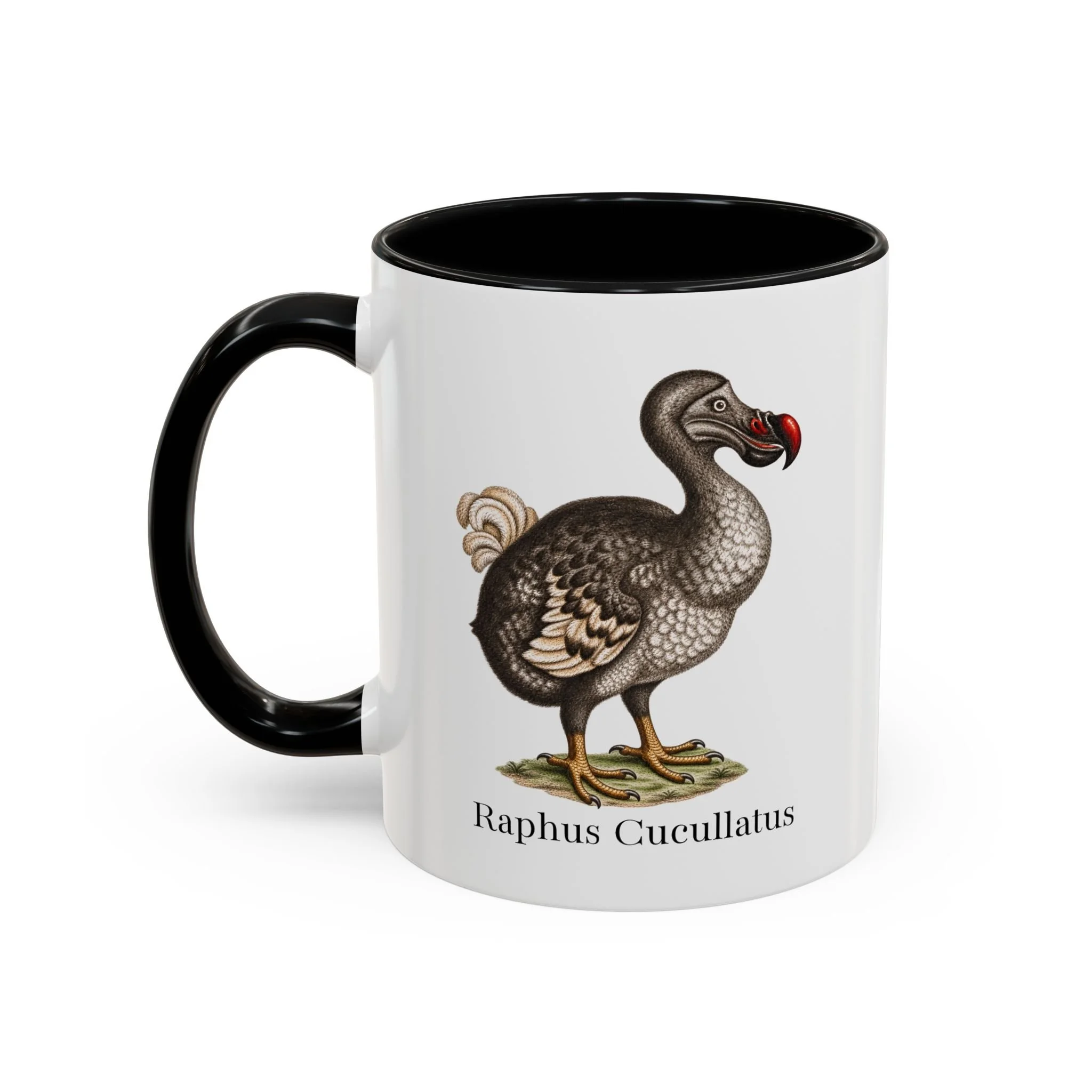

Dodo Mug
The Dodo and the Guinea Pig, George Edwards, 1757. Originally published in Gleanings of Natural History, volume II, plate 294 (London, 1760).
The dodo disappeared during the seventeenth century, following Dutch settlement of Mauritius. Habitat destruction and the introduction of animals such as rats, pigs, and cats contributed to its extinction. Today, it remains one of the world's most recognizable symbols of extinction. George Edwards created his engraving from an earlier painting of the bird, long after the species had vanished.